


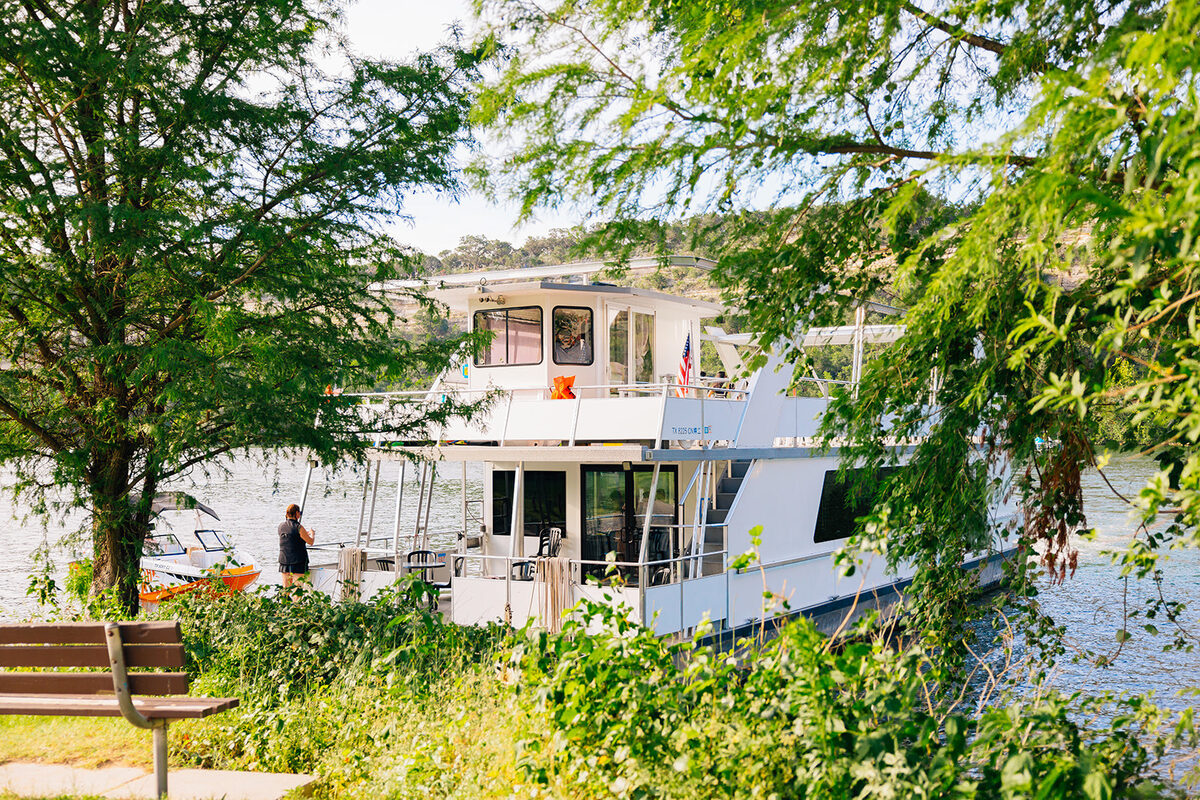
Tarrytown versus Westlake Hills is the definitive luxury neighborhood debate in Austin, and the right answer is different for every buyer. Tarrytown is an urban-adjacent enclave where you can walk to coffee, restaurants, and Lake Austin's waterfront venues while living minutes from downtown's cultural core. Westlake Hills is a gated, Hill Country sanctuary where acreage, canyon views, privacy, and Eanes ISD are the calling cards. Both neighborhoods trade at $1.5M and above. Both attract successful executives, families, and empty nesters. But they deliver completely different day-to-day experiences, and the buyers who end up happiest are the ones who chose based on lifestyle, not just price per square foot.
The Core Difference, Urban Sophistication vs Hill Country Privacy
The gap between Tarrytown and Westlake Hills is not about prestige, both neighborhoods are equally established and respected in Austin's luxury market. The gap is about how you want to inhabit your home and your city.
Tarrytown sits between MoPac Expressway (Loop 1) and Lake Austin, roughly 1.5 miles west of the Texas State Capitol. Its streets are canopied by live oaks that have been growing since the 1940s, and the architecture reflects that vintage, mid-century bungalows, Tudor cottages, and a generation of custom rebuilds that blend old Austin character with modern interiors. The neighborhood has a genuine street life: neighbors walk dogs past each other's front porches, kids ride bikes to Casis Elementary, and the Saturday morning scene on Lake Austin Boulevard feels more like a village than a Texas suburb. Walk Score estimates for the neighborhood run in the 60s–70s on most blocks, which is exceptional for Austin.[6]
Westlake Hills is an incorporated city unto itself, the City of Westlake Hills, occupying the limestone ridges and cedar-oak canyons southwest of Austin across the Barton Creek greenbelt. Its topography produces the sweeping Hill Country views that define its character: homes with canyon panoramas, private pools overlooking cedar-covered hills, and lots that measure in acres rather than fractions. The nearest walkable retail is not within walking distance for most residents, Westlake Hills has a Walk Score below 20 on most parcels. That is not a flaw for its buyers; it is a feature. Privacy, separation from urban density, and the quiet of a neighborhood where through-traffic is minimal are precisely what Westlake Hills buyers are purchasing.
Tarrytown Profile, Who Lives Here and Why
Tarrytown has been Austin's premier in-town neighborhood for more than seven decades. Bounded by Lake Austin to the west, MoPac to the east, and 35th Street to the north, it is compact enough to feel like a cohesive community and desirable enough that homes almost never stay on the market long. The neighborhood attracts what you might call "old Austin money" alongside a newer wave of executives, professionals, and creatives who want proximity to downtown without the density of East Austin or the South Congress corridor.[1]
The housing stock runs the full range of Austin's architectural history. Original craftsman bungalows from the 1930s and 1940s have survived on their original footprints alongside teardown-and-rebuilds on the same lots, contemporary custom homes that retain the neighborhood's scale while delivering modern amenities. Tudor-style homes from the 1950s and 1960s, some entirely original, some meticulously updated, line the interior streets. Along Lake Austin Boulevard and the streets that dead-end at the waterfront, prices escalate sharply, Lake Austin frontage in Tarrytown routinely trades between $5M and $15M, making it some of the most expensive residential real estate in Texas.
Casis Elementary, which anchors the Tarrytown neighborhood within Austin ISD, draws buyers from across the metro who want an exceptional in-city public school. Rated 9/10 by GreatSchools, Casis feeds into O. Henry Middle School and Austin High School, both of which are well-regarded within AISD. The neighborhood elementary school dynamic is part of what gives Tarrytown its family-oriented character, even though many residents are empty nesters or single professionals, the presence of school-age children walking to Casis gives the streets an energy that purely adult-oriented luxury enclaves often lack.
Empty nesters represent a significant buyer segment in Tarrytown. The neighborhood's walkability means that giving up a car is genuinely feasible for residents who no longer need to drive children to school or sports. The Hula Hut, Mozart's Coffee, and the Lake Austin waterfront are within walking distance. The Clarksville neighborhood's restaurants and bars are a short walk or a three-minute Uber. Tarrytown residents do not need to drive to live well, which is a meaningful quality-of-life distinction in a city where almost every other neighborhood requires a car for everything.
Westlake Hills Profile, Who Lives Here and Why
Westlake Hills is a city within a city, incorporated in 1953 and fiercely protective of its character ever since. With a population of just over 5,000, it maintains extremely low residential density across its hilly terrain, where limestone bluffs, cedar breaks, and canyon draws dictate lot configurations that would be impossible to replicate in Travis County's flatter suburbs. The result is a neighborhood where homes feel genuinely private, separated by topography, vegetation, and distance in ways that walled subdivisions elsewhere in Austin simply cannot replicate.[5]
The buyer profile in Westlake Hills skews toward technology executives, corporate leaders, and families who have placed Eanes ISD at the top of their priority list. The school district's dominance in the Austin market cannot be overstated: families with school-age children routinely pay a premium of $200,000–$400,000 over comparable properties in Austin ISD simply to land within Eanes boundaries. That premium is rational when you consider Westlake High School's college placement rates and the longitudinal outcomes for graduates, Westlake HS consistently places in Texas Monthly and U.S. News rankings as one of the top public high schools in the state.
Privacy is the other dominant value proposition. Westlake Hills's topography and large lot minimums mean that neighbors are often not visible from one another's living rooms. Properties with Hill Country views, which are plentiful in Westlake, offer the sensation of living in a rural setting while remaining 15–20 minutes from downtown Austin by car. For buyers relocating from San Francisco, New York, or other dense coastal metros, the combination of a world-class school district, hill country privacy, and reasonable commute to a growing tech economy is genuinely difficult to find anywhere else at this price point.
New construction has been active in Westlake Hills over the past decade. The inventory of buildable lots in established neighborhoods is severely limited, which has driven teardown-and-rebuild activity on legacy properties and premium pricing on remaining vacant land. Contemporary Hill Country architecture, clean lines, native stone, floor-to-ceiling glass framing landscape views, dominates new builds, though traditional limestone ranch-style homes from the 1970s and 1980s also remain plentiful and represent the entry-level renovation opportunity for buyers willing to take on a project.
School District Deep Dive, Austin ISD vs Eanes ISD
No factor drives more Tarrytown vs Westlake Hills decisions than the school district, so it deserves a direct comparison.[3][4]
Austin ISD (Tarrytown): Austin ISD is a large urban district serving approximately 70,000 students across more than 130 campuses. Within the Tarrytown catchment, Casis Elementary earns a 9/10 rating from GreatSchools and is one of the district's flagship campuses, with strong test scores, active parent involvement, and a dedicated fundraising foundation that supplements district programming. O. Henry Middle School is well-regarded, and Austin High School draws students from several of Austin's most desirable west-side neighborhoods, producing a diverse and academically competitive student body. Austin HS has strong AP program participation and college acceptance rates. For families who value diversity, arts programming, and proximity to the cultural vitality of an urban school system, Austin ISD at these specific campuses delivers a genuinely excellent experience.
Eanes ISD (Westlake Hills): Eanes ISD is a small, homogeneous, suburban district serving approximately 8,000 students across seven campuses, all of which are rated 9–10/10 by GreatSchools. The district has among the highest test scores, AP pass rates, and four-year college attendance rates in Texas. Westlake High School, the district's single secondary campus, is regularly ranked among the top five public high schools in Texas by Texas Monthly and U.S. News, and it places graduates at top universities at rates exceeding most Texas private schools. Eanes's small size means that a single engaged parent community governs all seven schools, resulting in exceptional coordination, fundraising, and extracurricular programming. The trade-off is limited diversity, Eanes ISD's student population is predominantly white and affluent, which is a meaningful consideration for families who prioritize exposure to different backgrounds and perspectives.
The honest summary: both school systems offer excellent education within their respective catchment neighborhoods. If your children are elementary-school age and you are primarily focused on formative academics and community connection, Casis Elementary in Tarrytown is among the best elementary options in the city. If you have middle or high school age children and academic performance, AP programming, and college placement are paramount, Eanes ISD and Westlake High School represent the top of the Texas public school market.
Commute and Location, The Practical Calculus
For buyers who work downtown or in the central Austin tech corridor, commute distance matters, and here Tarrytown has a structural advantage that does not appear in any listing database.[6]
Tarrytown to downtown Austin is 8–12 minutes by car on most weekday mornings, with the exception of severe MoPac congestion events. The neighborhood is also bikeable to downtown via the Lake Austin Boulevard bike lanes and Enfield Road corridor, a meaningful consideration for buyers who want to reduce car dependence. To the Domain (North Austin's tech hub), Tarrytown is a 20–25 minute drive depending on traffic. The 360 connector and MoPac provide reasonably direct routes in most directions.
Westlake Hills to downtown typically runs 18–28 minutes, depending on whether you're navigating Capital of Texas Highway (360), Bee Cave Road, or MoPac. During peak morning hours, westbound traffic on 360 and Bee Cave Road can extend these times meaningfully. The Texas Department of Transportation's 360 corridor improvements have modestly helped, but Westlake Hills remains significantly more commute-intensive than Tarrytown for downtown workers. The calculation changes for buyers whose primary workplace is in the 360 corridor itself, the Domain, or tech campuses in the Bee Cave/Lakeway direction, from Westlake Hills, these destinations are often faster to reach than from central Austin.
Both neighborhoods are car-dependent for grocery runs, errands, and most social activities. Tarrytown's walkability advantage is real but limited, it largely applies to the Lake Austin Boulevard corridor and the immediate Clarksville border. Interior Tarrytown streets still require a car for most daily needs beyond a local coffee shop. Westlake Hills requires a car for everything without exception, including school drop-off, pharmacy, and grocery trips. Families with multiple school-aged children active in sports, tutoring, and extracurriculars often find that Westlake Hills's car-centric layout demands two vehicles at a minimum.
Price Trajectory, Which Has Appreciated More?
Both Tarrytown and Westlake Hills saw dramatic appreciation during the 2020–2022 Austin boom, followed by a meaningful correction in 2023–2024 as rising mortgage rates suppressed demand across Austin's luxury tier.[2] By 2025–2026, both neighborhoods have stabilized, but their recovery dynamics differ in instructive ways.
Westlake Hills has demonstrated greater price resilience through the correction. The primary driver is supply constraint: there are simply very few buildable lots remaining within Eanes ISD boundaries, and the geographic footprint of the district is fixed. When rates rise and overall market volume declines, Westlake Hills benefits from a scarcity dynamic that prevents deep discounting, motivated sellers prefer to wait rather than concede below the Eanes ISD premium. Median prices in Westlake Hills dipped approximately 8–12% from the 2022 peak before recovering, versus a more pronounced 15–20% drawdown in broader Austin markets.
Tarrytown's correction was shaped more by inventory sensitivity. Because the neighborhood's physical boundary is fixed and smaller, even a modest increase in listings, driven by empty nesters downsizing or executives relocating, creates proportional pressure on prices. During the 2023 correction, Tarrytown saw more days-on-market expansion and greater price negotiability than Westlake Hills. The positive corollary: buyers who purchased in Tarrytown during the 2023–2024 correction window entered at valuations that have since recovered, and the neighborhood's long-term appreciation track record remains among the strongest in Austin.
Looking forward, both neighborhoods are well-positioned relative to the broader Austin market. The structural driver of Austin luxury real estate, continued corporate relocation, a growing tech workforce, and Texas's absence of a state income tax attracting high earners from California and the Northeast, supports the premium pricing in both Tarrytown and Westlake Hills over a multi-year horizon. The difference is volatility: Westlake Hills's price floor is more durable in downturns, while Tarrytown's ceiling may be higher in strong markets due to the scarcity of genuine walkable urban luxury anywhere in Austin.
Frequently Asked Questions
Is Tarrytown or Westlake Hills more expensive?
Westlake Hills generally commands higher prices at the top of the market, with luxury estates and newer construction regularly trading at $3M–$8M+. Tarrytown's entry point is approximately $1.5M for a livable home on a standard lot, while Westlake Hills starts around $2M. However, Tarrytown's Lake Austin waterfront homes trade between $5M and $15M, making them among the most expensive residential properties in Texas. At the median, both neighborhoods are similarly priced in the $2.5M–$3.5M range; the difference emerges more at the extremes.
Which has better schools, Tarrytown or Westlake Hills?
Westlake Hills is served by Eanes ISD, widely regarded as the top school district in Austin and one of the best in Texas, all campuses rate 9–10/10 and Westlake HS consistently ranks in the top 5 statewide. Tarrytown is served by Austin ISD, with Casis Elementary rated 9/10 as one of AISD's strongest campuses. For families prioritizing school district above all else, Westlake Hills has the edge. For families who value a diverse urban school environment and in-city living, Tarrytown's Austin ISD campuses are genuinely excellent.
Is Tarrytown walkable?
Yes, Tarrytown is one of the most walkable luxury neighborhoods in Austin, with Walk Scores in the 65–75 range on most blocks, exceptional for a Texas high-end residential neighborhood. Residents can walk to Lake Austin Boulevard coffee shops and restaurants, the Clarksville entertainment district, and the Mozart's and Hula Hut waterfront venues. The neighborhood is also bikeable to downtown. Westlake Hills, by contrast, is almost entirely car-dependent with Walk Scores below 20 on most parcels.
What type of homes are in Tarrytown Austin?
Tarrytown features mid-century bungalows and Tudor-style cottages from the 1940s–1960s alongside fully rebuilt contemporary custom homes. Lot sizes range from 0.15 acres (standard interior lots) to 0.5+ acres for corner lots and Lake Austin-adjacent properties. Prices span from approximately $1.5M for a modest original home to $15M+ for Lake Austin waterfront estates. Most active buyers today are either renovating original homes or executing teardown-and-rebuilds. Move-in ready updated homes in the $2M–$4M range are the most competitive segment of the Tarrytown market.