

Moving to Austin from Dallas: 2026 Relocation Guide
Dallas vs Austin: The Texas Rivalry Explained
Texas has always had an internal debate between its two great inland cities: Dallas, the corporate hub, and Austin, the cultural capital. The rivalry is friendly but real, and it plays out daily in the choices of thousands of Texans who relocate between the two metros each year. According to the U.S. Census Bureau, the Austin-Round Rock-Georgetown MSA grew by approximately 18% between 2020 and 2025, while the Dallas-Fort Worth-Arlington MSA grew by roughly 12% in the same period. Both are extraordinary growth stories by national standards, but Austin's higher velocity reflects the concentrated intensity of its tech and cultural draw.
Dallas offers what Austin cannot: size. The DFW metro at over 7 million people has a depth of corporate infrastructure, international connections, and lifestyle amenity diversity that Austin's ~2.4 million metro cannot match. Multiple professional sports franchises, a world-class arts district, major international airports with global direct routes, and a more established corporate real estate market define Dallas's advantages. For executives in financial services, corporate law, energy, or logistics, DFW often provides a more natural professional environment.
Austin offers what Dallas struggles to replicate: character. The live music scene, 250+ venues, South by Southwest, Austin City Limits, is nationally and globally recognized. The outdoor recreation access, Barton Springs, Lady Bird Lake, the Barton Creek Greenbelt, Hill Country parks within an hour's drive, creates a daily lifestyle interaction with nature that is simply not available in North Texas's flat, manicured suburban landscape. And the startup culture, anchored by the University of Texas and a decade of tech company arrivals, has created a creative professional energy that Dallas's corporate DNA does not easily manufacture.
Housing Market Comparison: DFW vs Austin 2026
The North Texas Real Estate Information Systems (NTREIS) tracks Dallas median home prices near $415,000 in early 2026, while the Austin Board of Realtors (ABoR) puts Austin's median at approximately $485,000. The 17% premium that Austin commands over Dallas reflects its geography (hills, lake, creeks constrain supply) and employer concentration.
Both cities saw corrections from their 2022 peaks. According to Redfin Research, Austin corrected more significantly, peak-to-trough declines of 15–18% in some submarkets, which has actually made 2026 a more favorable Austin entry window compared to 2021–2022. Dallas saw a milder correction of 6–10% from peak. Both markets have stabilized in 2025–2026 with gradual appreciation resuming.
Property tax rates are nearly equivalent, approximately 2.2% effective in Dallas metro versus 2.1% in Austin. Dollar-amount tax bills on comparable homes will run slightly higher in Austin given higher prices, but the Texas Comptroller confirms no meaningful rate differential. Dallas buyers moving to Austin should file a Travis County homestead exemption immediately after closing to access approximately $100,000 of appraised value exclusion for school district taxes.
Austin Neighborhoods That Dallas Transplants Love
East Austin (78702), The Bishop Arts Equivalent
Dallas residents who gravitate toward Bishop Arts District, Deep Ellum, or the M Streets find their personality match in East Austin. The neighborhood combines independent restaurants, cocktail bars, coffee shops, and creative office space along East 6th Street and East Cesar Chavez. Home prices in 78702 range from roughly $500,000 for smaller cottages to over $900,000 for larger lots with ADUs. The energy is young, diverse, and entrepreneurial, qualities that Dallas transplants from the creative professional class recognize and embrace immediately.
South Congress / Bouldin Creek (78704), Austin's Signature Corridor
If a Dallas transplant has one non-negotiable Austin experience on their list, it's usually South Congress Avenue. The mile-long stretch of locally-owned shops, restaurants like Perla's and Güero's, and the proximity to the Barton Creek Greenbelt creates a neighborhood identity unlike anything in the DFW market. Bouldin Creek's residential blocks feature craftsman bungalows, live oaks, and a walkable neighborhood village feel. Prices in 78704 range from $700,000 to over $2M for prime lots.
Mueller (78723), The Planned Urbanist Community
Dallas has Lakewood, M Streets, and Midway Hollow, walkable infill neighborhoods prized for their character. Mueller is Austin's equivalent: a master-planned community built on 700 acres of former airport land, featuring a retail town center, farmers market, excellent schools, and a diverse mix of housing types. Mueller is also Austin's most socioeconomically intentional community, with income-restricted units integrated throughout. Prices run $480,000–$1.1M.
Tarrytown / Old West Austin (78703), The Preston Hollow Equivalent
Dallas transplants from Preston Hollow, University Park, or Highland Park, wealthy, tree-lined, close-in luxury neighborhoods, often find their Austin counterpart in Tarrytown and Old West Austin. These established West Austin neighborhoods feature large lots, significant tree canopy, and proximity to downtown via Lake Austin Boulevard. Prices run $1.2M to $4M+. Eanes ISD's westernmost schools are accessible from portions of this area.
Westlake Hills / Barton Creek, The Trophy Address
For Dallas buyers arriving with $400,000+ in equity from the sale of an upscale Plano, Southlake, or Frisco home, Westlake Hills is Austin's premier luxury address. Wooded hillside lots, canyon and lake views, Eanes ISD, and proximity to downtown via Bee Caves Road create a live-play-educate triangle that commands a significant premium. Entry-level Westlake starts around $1.5M; canyon-view estates reach $6M+.
Job Market: Austin Startup Culture vs Dallas Corporate
The job market comparison between Dallas and Austin is a tale of two economic personalities. Dallas is a headquarters city: AT&T, Toyota North America, JPMorgan, Goldman Sachs, and Charles Schwab have all relocated or significantly expanded their DFW presence. The corporate infrastructure, law firms, accounting firms, financial services, logistics, is deep and mature. For mid-career and senior executives in traditional industries, DFW offers more C-suite density.
Austin is a growth city: Apple's 133-acre campus, Tesla's Gigafactory, Dell Technologies, Oracle's relocated HQ, and thousands of VC-backed startups create an employment density skewed toward technology, engineering, product management, and entrepreneurship. The Bureau of Labor Statistics documents Austin as among the top 10 U.S. metros for technology employment growth 2020–2025. Early- and mid-career tech professionals find Austin's labor market consistently competitive.
The University of Texas at Austin feeds a talent pipeline that Dallas cannot match for tech and engineering. UT's computer science, engineering, and business programs are Top 15 nationally, and the university's proximity to the employer ecosystem creates a flywheel of talent that reinforces Austin's competitive advantage in technology.
For Dallas transplants changing industries, from finance to fintech, from oil and gas to clean energy tech, from healthcare to healthtech, Austin is often the catalyst. The overlapping skill sets between traditional industries and their technology equivalents are well-recognized by Austin's startup and scale-up employer ecosystem.
Culture and Lifestyle: Why Austin Wins for Many Dallas Movers
Ask Dallas transplants who have lived in Austin for two or more years what they miss about Dallas, and the answers follow a consistent pattern: professional sports (Cowboys, Mavs, Rangers), Costco and suburban shopping diversity, the Dallas arts district (world-class museums and symphony), and the DFW airport's global route network. These are real gaps.
Ask what they don't miss, and the list is equally consistent: the suburban sprawl, the lack of outdoor recreation proximity, the heat-and-concrete summer experience with no natural swimming holes, and the cultural homogeneity of DFW's corporate-suburban identity. Austin answers these gaps with extraordinary force.
Barton Springs Pool, a natural, spring-fed swimming pool in Zilker Park, open year-round, is itself a quality-of-life amenity that Dallas simply cannot replicate. Lady Bird Lake's 10-mile hike-and-bike trail encircling the urban core creates a daily outdoor ritual available to residents from any central neighborhood. The Barton Creek Greenbelt offers 12+ miles of limestone canyon hiking and swimming holes within 10 minutes of downtown. The Hill Country beyond Austin adds a geography of limestone cliffs, spring-fed rivers, and vineyards within a 90-minute drive.
Live music is not a metaphor in Austin, it is infrastructure. More live music venues per capita than any U.S. city, a world-famous annual festival (SXSW) that transforms the city for two weeks each March, and the Austin City Limits festival each October create a cultural calendar that is simply unavailable in the DFW market at comparable scale.
Dallas buyers often tell me they moved to Austin for the culture — the live music, the outdoor lifestyle, the startup energy — and stay for the appreciation. Austin's trajectory from 2020–2026 has validated what every transplant knew intuitively: this city is special.
Selling in Dallas and Buying in Austin
The most complex logistical piece of a Dallas-to-Austin relocation is coordinating two transactions in two different markets approximately 200 miles apart. Here is a step-by-step framework that has worked for Grewal RE Group clients:
- Establish your Austin budget before listing in Dallas. Your net proceeds from the Dallas sale, minus your remaining mortgage, closing costs, and moving expenses, determine your Austin purchasing power. Work with an Austin-based lender to get pre-approved based on projected Dallas equity. Many Dallas buyers arrive with $200,000–$400,000 in equity from properties purchased pre-2020.
- Time your Dallas listing strategically. Dallas's spring market (March–May) and fall market (September–October) generate the strongest buyer activity. Listing at peak demand maximizes your Dallas sale price, giving you more purchasing power in Austin.
- Use contingent-sale provisions carefully. Austin sellers of moderately-priced homes ($450,000–$650,000) are increasingly willing to accept contingent offers, particularly if your Dallas home is already under contract. Luxury sellers ($1M+) in Austin are generally less flexible, expect to bridge finance or find alternative sequencing.
- Consider a short-term Austin rental. Renting in Austin for 3–6 months while you sell in Dallas gives you unhurried buyer position. Austin's rental market in 2026 offers furnished options in most central neighborhoods. This approach eliminates bridge financing risk and allows you to physically explore Austin neighborhoods before committing to a ZIP code.
- Account for both transactions' closing costs. Budget 1–2% of the Dallas sale price for seller-side closing costs and approximately 2–3% of the Austin purchase price for buyer-side closing costs. Texas closing costs are relatively standardized; title insurance, surveys, and escrow fees are the primary variables.
- File Austin homestead exemption immediately. After closing on your Austin home, file your Travis County homestead exemption online at the Travis Central Appraisal District. The annual school district tax savings are significant, approximately $1,000–$2,000 per year depending on your school district rate.
The National Association of Realtors reports that intrastate relocations between major Texas metros are among the most common repeat-buyer transaction types nationally. Agents experienced in both markets can identify Dallas-Austin comps, understand both negotiation cultures, and advise on timing, reducing the risk of carrying two mortgages or landing in a bidding situation without clarity on your exit timeline.
Frequently Asked Questions: Moving to Austin from Dallas
Is Austin or Dallas a better place to live?
How does Austin housing compare to Dallas in 2026?
What Dallas neighborhoods are comparable to East Austin or South Congress?
How long is the drive from Dallas to Austin?
Are Austin property taxes higher than Dallas?
Sources & Further Reading
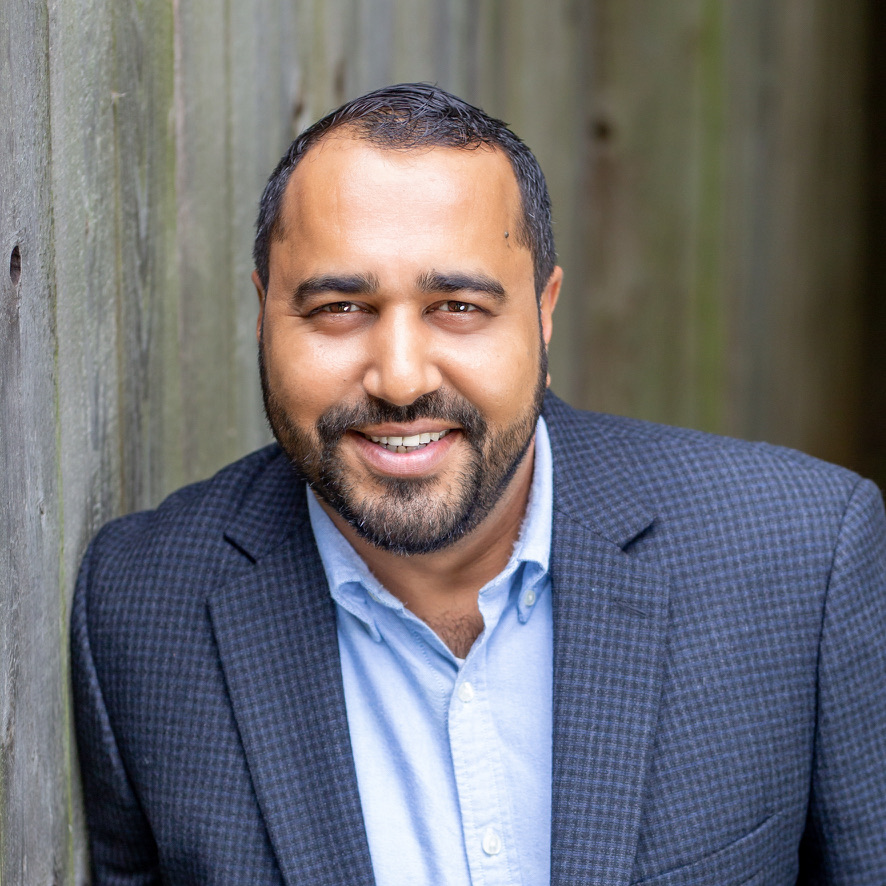
Shivraj Grewal
Shivraj Grewal is the founder of Grewal RE Group, a luxury real estate practice based in Austin, TX. Specializing in high-net-worth relocations, investment acquisitions, and luxury transactions across Austin, Westlake, Barton Creek, and the Texas Hill Country. Licensed through Compass RE Texas, (512) 617-0001.
Ready to Make the Move from Dallas to Austin?
Work with an Austin luxury real estate specialist who understands the Dallas-to-Austin transition from both sides. 100+ transactions, $100M+ volume, 117 Google reviews at 5.0 stars.
Schedule a Consultation →