


Austin's Thriving International Community
Austin has transformed from a college town and state capital into one of the most internationally diverse cities in the American Southwest. According to U.S. Census Bureau data, the Austin metropolitan statistical area now counts residents from more than 100 countries of origin, with the foreign-born population approaching 15% of the total metro population, a proportion that has roughly doubled since 2000.
The primary economic engine of this diversity is the technology sector. Austin's technology and semiconductor ecosystem, anchored by Apple's campus in the Domain area, Samsung's fabrication plant in Taylor, Tesla's Gigafactory in Southeast Austin, and Dell's global headquarters in Round Rock, creates sustained demand for skilled international talent, the majority of whom arrive on H-1B, L-1, or O-1 visas before transitioning to permanent residency.
The Austin Chamber of Commerce reports that the Austin metro adds roughly 40,000 to 60,000 new residents annually, and the international share of that inflow continues to grow. For real estate professionals and buyers alike, understanding where Austin's international communities have established roots, and where they are growing, is essential market intelligence.
Key Takeaways
- Austin has transformed from a college town and state capital into one of the most internationally diverse cities in the American Southwest.
- According to U.S.
- The primary economic engine of this diversity is the technology sector.
- The Austin Chamber of Commerce reports that the Austin metro adds roughly 40,000 to 60,000 new residents annually, and the international share of that inflow continues to grow.
- For real estate professionals and buyers alike, understanding where Austin's international communities have established roots, and where they are growing, is essential market intelligence.
Indian-American Community in Austin
Austin's Indian-American community is the city's fastest-growing international population segment and among the most economically influential. Concentrated in Northwest Austin (78729, 78750, 78759), Round Rock (78681, 78664), and Pflugerville (78660), this community has built a dense network of cultural institutions, grocery stores, restaurants, temples, and professional organizations that make these neighborhoods self-contained ecosystems for newly arrived families.
The primary employment driver is Austin's technology corridor: Apple's 3-million-square-foot campus near the Domain employs thousands of H-1B workers, predominantly from India. Other significant employers include IBM, Oracle, Dell Technologies (headquartered in Round Rock), and a growing constellation of Indian-founded startups and venture-backed companies that have chosen Austin as their home.
Key Northwest Austin Anchors for Indian-American Families
The intersection of 183/MoPac at Lakeline and the Research Boulevard corridor functions as the de facto center of Austin's South Asian community. Within a 3-mile radius, families will find Fiesta Mart and Indian grocery stores like Patel Brothers, multiple South Indian and North Indian restaurants, the Austin Hindu Temple on Loop 360, and several Indian cultural and classical dance academies.
Housing Profile: Northwest Austin (78750/78729)
Median home prices range from $580,000 to $900,000, with newer townhomes and condominiums near the Domain offering entry points from the mid-$300Ks. The area falls within Austin ISD and Round Rock ISD depending on specific address, both offer strong elementary and middle school programs. Commute to the Apple campus is under 10 minutes from most addresses.
For families considering Round Rock, the 78681 zip code offers some of the best value in the metro for South Asian community proximity. Neighborhood grocery options include multiple Indian grocery stores along North Mays Street, and the area hosts established Hindu and Sikh temple facilities. Dell's Round Rock headquarters creates concentrated employment demand, and the Round Rock ISD is consistently rated among the top 10 school districts in Texas by the Texas Education Agency.
East Asian Communities & Neighborhoods
Austin's Chinese-American, Korean-American, and Vietnamese-American communities have established strong neighborhood presences in both North Austin and the northwestern suburbs, though the character of each community differs markedly.
Chinese-American Community
The informal "Chinatown" area along North Lamar Boulevard near Rundberg Lane (78753) remains the cultural heart of Austin's Chinese-American community, hosting the largest concentration of Chinese grocery stores, restaurants, and cultural businesses in the city. H Mart on North Lamar is a major anchor, as is the 99 Ranch Market at the Chinatown Center shopping district on North Lamar at the 183 intersection.
However, residential concentration for Chinese-American professionals in tech has shifted significantly toward Cedar Park, Northwest Austin, and the Lakeline/Anderson Mill area, where newer single-family homes and proximity to Apple, Samsung, and related employers align with the community's professional profile. Home prices in the Cedar Park corridor range from $450,000 to $750,000, significantly more accessible than Central Austin while maintaining excellent school district ratings within Leander ISD.
Korean-American Community
Austin's Korean-American community is smaller but tightly knit, with cultural anchors including Korean churches in Northwest Austin and Korean-owned businesses along the McNeil Road and North Lamar corridors. Korean grocery options are available at H Mart, and several Korean restaurants have established in both North Austin and Cedar Park.
Vietnamese-American Community
Austin's Vietnamese-American community has historically been centered in the North Lamar/Rundberg corridor alongside the Chinese-American community. A newer residential wave has followed growth corridors toward Pflugerville and the northeast quadrant of the metro, areas where housing affordability is better and community businesses have followed.
Latin American Expat Communities
Austin's Latin American expat community is the city's largest international population by origin region, encompassing Mexican, Colombian, Venezuelan, Brazilian, and Argentine residents who have built substantial cultural presence across multiple Austin neighborhoods.
South Austin, particularly the 78745 and 78748 zip codes along South Congress and South Lamar, has historically served as a Latino cultural center, and remains so despite gentrification pressures. East Austin (78702) similarly hosts a long-established Mexican-American community, though rising home prices have pushed newer arrivals further east and south.
The Pflugerville area (78660) has become an important destination for Mexican and Central American families seeking affordable homeownership with access to established cultural services. The corridor along Cameron Road through Northeast Austin also supports a dense network of Latin American-owned businesses, restaurants, and community organizations.
Brazilian and Colombian tech expats, increasingly common in Austin's startup and venture capital ecosystem, tend to cluster in Central Austin and the Domain area, prioritizing walkability and nightlife access alongside community.
European Tech Expats in Austin
Austin's European expat community, predominantly British, German, French, and Israeli, has grown substantially with the expansion of European-founded technology companies establishing Austin offices. Dell, Apple, and Oracle all have significant European engineering talent, and Austin's startup scene has attracted founders and executives from the UK, Germany, and Israel in particular.
European expats in Austin disproportionately favor Central Austin neighborhoods: Mueller (78723), Travis Heights (78704), Clarksville (78703), and Tarrytown (78703). The preference for walkable, architecturally interesting neighborhoods with independent restaurant and retail ecosystems reflects European urban sensibilities. Home prices in these corridors range from $700,000 to well above $2M for premium properties on larger lots.
British and German families with school-age children often seek enrollment at the Austin-based International School of Texas, which offers International Baccalaureate curriculum aligned with European educational norms. Proximity to this school, located near the Domain/North Austin area, also draws European families to the NW Austin corridor despite their preference for urban neighborhoods.
International Schools & Family Housing
For international families with children, the availability of internationally accredited schooling is often the primary decision factor in neighborhood selection. Austin has two dedicated international schools:
International School of Texas
Offers full IB (International Baccalaureate) curriculum from early childhood through high school. Attracts European, Indian, and East Asian expat families. Visit internationalschooloftexas.com for enrollment information. Proximity to the Domain creates a natural cluster of expat families in the 78759/78750 corridor.
Austin International School
French-English bilingual elementary program serving Austin's French-speaking expat community and internationally minded English-speaking families. Anchors a small but growing French expat community in Central Austin. Located in the Hyde Park/University area, within the University of Texas research ecosystem.
Austin ISD International Programs
Austin ISD offers dual-language immersion programs (Spanish-English and Mandarin-English) at select elementary campuses. For international families whose children are native speakers in Spanish or Mandarin, these programs provide excellent public school integration options at no additional tuition cost.
F-1 & H-1B Visa Holders: Housing Considerations
One of the most common questions we receive from international clients is whether visa status affects their ability to purchase a home in Texas. The short answer is: it does not. There is no federal or Texas state law prohibiting non-citizens, including F-1 students, H-1B workers, or L-1 transferees, from purchasing real estate in the United States. See USCIS.gov for current immigration guidance.
Key Housing Tips for Visa Holders
H-1B and L-1 holders can typically qualify for conventional mortgages with a valid visa stamp, I-94, employment authorization documentation, and 2 years of U.S. tax returns. F-1 students on OPT may face more restrictions and should consult with a lender specializing in foreign national or ITIN loans. Down payment requirements for non-permanent resident aliens are typically 20–30% through conventional channels.
For families concerned about visa renewal timing relative to their mortgage, our recommendation is to work with lenders who have experience with international clients and to structure transactions to close well within the current visa validity window. Many H-1B buyers in Austin choose to purchase during years 1–2 of their first H-1B petition, providing maximum stability before renewal timelines become a concern.
| Visa Type | Purchase Eligibility | Typical Mortgage Access | Key Considerations |
|---|---|---|---|
| H-1B | Yes, no restriction | Conventional with 20% down + 2yr tax returns | Employer sponsorship letter helpful; check visa validity window |
| L-1 (Intracompany) | Yes, no restriction | Similar to H-1B; some lenders require additional docs | Shorter initial visa period requires planning |
| F-1 / OPT | Yes, no restriction | ITIN or foreign national loans; higher down payment | Post-OPT employment uncertainty; consult immigration attorney |
| Green Card / LPR | Yes, full access | Same as U.S. citizen, all conventional options | Best mortgage access; no visa timing concerns |
| E-2 / EB-5 Investor | Yes, no restriction | Conventional; often purchase cash | Investment visa holders frequently purchase above median price point |
Best Neighborhoods for International Families
Based on our work with Austin's international buyer community across 100+ transactions, here is a summary of the neighborhoods we most consistently recommend by community profile:
| Community Profile | Top Neighborhoods | Zip Codes | Price Range |
|---|---|---|---|
| Indian-American / South Asian Tech | NW Austin, Round Rock, Pflugerville | 78750, 78681, 78660 | $380K–$900K |
| Chinese-American / East Asian Tech | Cedar Park, N. Austin, NW Austin | 78613, 78753, 78729 | $420K–$750K |
| Korean / Vietnamese Community | North Austin, Cedar Park | 78753, 78729, 78613 | $380K–$680K |
| Latin American Expats | South Austin, East Austin, Pflugerville | 78745, 78702, 78660 | $350K–$800K |
| European Tech Expats | Central Austin, Mueller, Travis Heights | 78703, 78704, 78723 | $700K–$2M+ |
| International School Families (IB) | NW Austin / Domain Corridor | 78759, 78750, 78729 | $500K–$950K |
Austin-Bergstrom International Airport Proximity
For international families with frequent travel to home countries, proximity to Austin-Bergstrom International Airport (ABIA) is a meaningful quality-of-life factor. The airport sits in Southeast Austin, making South Austin neighborhoods (78704, 78745, 78748) the closest residential zones. Round Rock and Pflugerville average 25–35 minutes to ABIA, while Northwest Austin and Cedar Park average 35–50 minutes. Central Austin neighborhoods typically run 15–25 minutes.
Frequently Asked Questions
Which Austin neighborhoods have the largest Indian-American community?
Northwest Austin (78729, 78750, 78759), Round Rock (78681, 78664), and Pflugerville (78660) have the highest concentrations of Indian-American residents in the Austin metro. These neighborhoods offer proximity to tech employers along the Research Boulevard and Domain corridor, strong school districts (Round Rock ISD, Pflugerville ISD), and established South Asian grocery stores, temples, and cultural institutions. The community's density in this corridor has made it largely self-sustaining for newly arriving families.
Can I buy a home in Austin on an H-1B or F-1 visa?
Yes. There is no U.S. law prohibiting non-citizens from purchasing real estate, including those on H-1B or F-1 visas. The process is similar to that for U.S. citizens, though mortgage qualification may require additional documentation including your visa, I-94, employment authorization, and two years of tax returns. Some lenders specialize in ITIN or foreign national loans for buyers without U.S. credit history. Consult USCIS.gov and a qualified mortgage lender to understand current requirements for your specific visa category.
Are there international schools in Austin?
Yes. Austin has two primary international schools: the International School of Texas in the Domain/North Austin area, which offers an IB curriculum from early childhood through high school, and Austin International School in central Austin, which provides bilingual French-English instruction at the elementary level. Austin ISD also offers Mandarin-English and Spanish-English dual language immersion programs at select public campuses at no additional tuition cost.
Where does Austin's Chinese-American community primarily live?
Austin's Chinese-American community maintains cultural anchors in North Austin along the North Lamar corridor near Rundberg Lane (the informal "Chinatown" district, including H Mart and 99 Ranch Market at Chinatown Center), while residential concentration for Chinese-American tech professionals has shifted toward Cedar Park, Northwest Austin, and the Lakeline/Anderson Mill area. These northwestern suburbs offer newer homes, excellent Leander ISD school ratings, and reasonable commutes to major employers.
What neighborhoods are best for international families relocating to Austin?
The best Austin neighborhoods for international families depend on community and employment priorities. For Indian-American families in tech: Northwest Austin (78750/78729) and Round Rock (78681). For East Asian families: North Austin and Cedar Park near the H Mart corridor. For Latin American expats: South Austin (78745) and East Austin (78702). For European tech expats: Central Austin (78704, 78703) and Mueller. For families prioritizing international IB schooling: the Domain/Northwest Austin corridor near the International School of Texas.
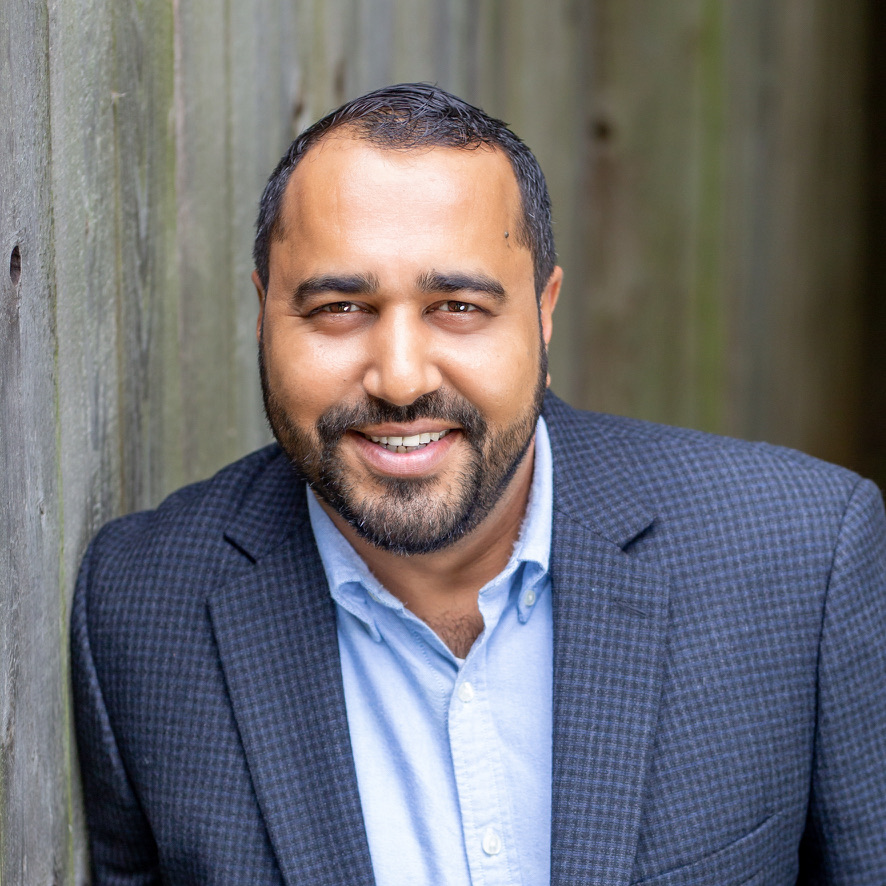
Shivraj Grewal
Relocating to Austin from Abroad?
With extensive experience serving Austin's international buyer community, from H-1B families to foreign national investors, Shivraj Grewal provides culturally informed real estate guidance for every stage of your Austin journey.
Schedule an International Buyer Consultation