
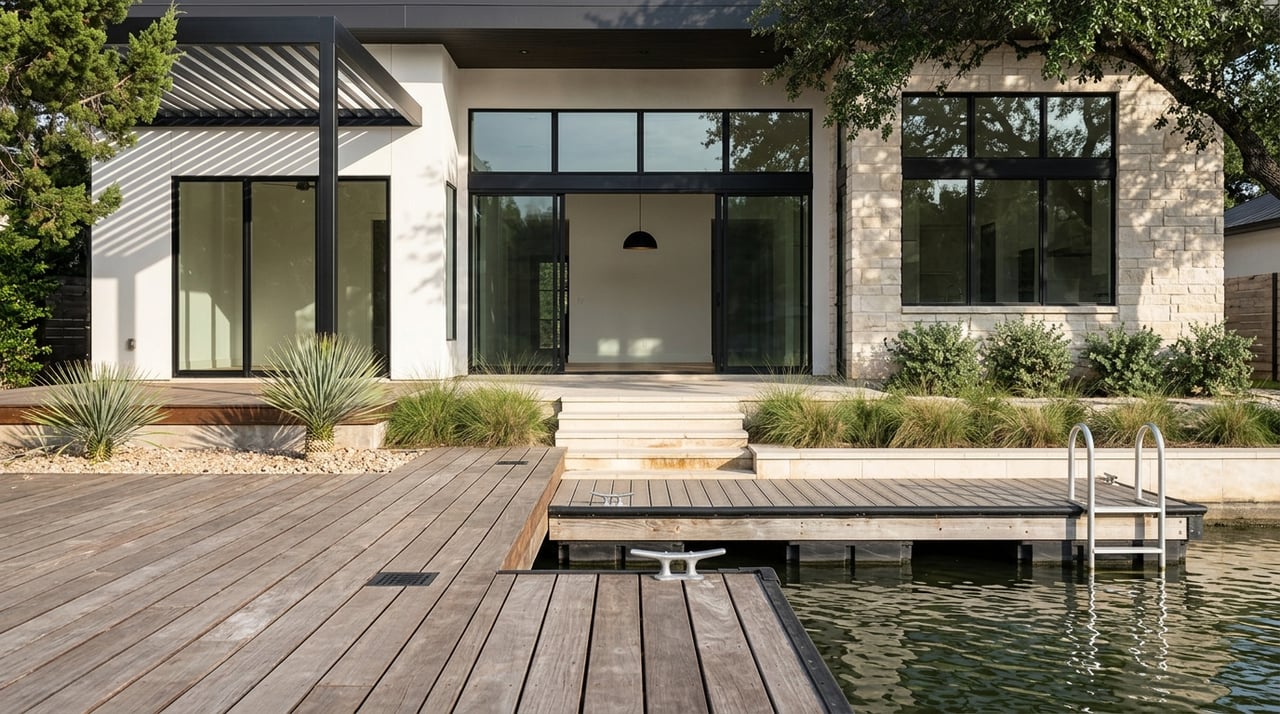
You can fall in love with a Lake Travis view in seconds, but buying the right waterfront home in Lakeway takes more than a pretty backdrop. If you are dreaming about keeping a boat nearby, spending weekends on the water, or simply waking up to Hill Country and cove views, it helps to know how waterfront living actually works here. This guide walks you through the lifestyle, the rules, and the property details that matter most so you can shop with confidence. Let’s dive in.
Why Lakeway Feels Different
Lakeway sits on the south shore of Lake Travis, about 25 miles west of downtown Austin in Travis County. The city describes itself as a resort community, with marinas, parkland, trails, greenbelts, a private airport, and a hotel and spa. That history matters because Lakeway still feels like a lake-lifestyle destination rather than a typical suburban neighborhood.
For buyers, that means your home search is often about more than square footage. You may be weighing cove access, dock potential, topography, and how easily you can enjoy the water day to day. In Lakeway, those details can shape both your experience and the long-term usability of the property.
What Waterfront Living Looks Like
Living on the water in Lakeway can mean different things depending on the home. Some properties have direct shoreline access. Others offer elevated views, nearby marina access, or close proximity to coves and lake-oriented recreation.
The city’s amenities help reinforce that lifestyle. Lakeway City Park offers waterfront access from Hurst Creek Cove and supports swimming, fishing, and kayaking. The park also has a life-jacket loaner station, and the city notes that there are no lifeguards on duty.
Lakeway’s outdoor setting extends beyond the shoreline itself. Canyonlands, the city’s largest trail network, sits at Rough Hollow Cove, showing how much of the area is shaped by inlets, overlooks, and Hill Country terrain. Lakeway Marina also offers boat rentals and a shipstore, which can be a practical option if you want water access without managing your own dock.
Start With Your Waterfront Goals
Before you tour homes, get clear on how you want to use the property. A waterfront home for quiet views is not always the same as a waterfront home built for frequent boating. Two homes can look similar online but function very differently once you factor in shoreline layout, water depth, and access rules.
Ask yourself a few basic questions early:
- Do you want a private dock, or would marina access work?
- Is your priority boating, kayaking, fishing, or views?
- Do you want to store a boat at home?
- Are you comfortable with stairs, slopes, or a more rugged shoreline?
- Will this be a full-time home, second home, or seasonal retreat?
These answers can help narrow your search faster and keep you focused on properties that truly fit your lifestyle.
Understand Dock Feasibility First
One of the biggest mistakes waterfront buyers make is assuming every shoreline lot can support a dock. In Lakeway, that is not always the case. According to LCRA, some shoreline areas are not suitable for docks because of shallow water, narrow coves, rocky terrain, or other hazards.
Even when docks are allowed, there are specific rules. On Lake Travis, residential docks are only allowed when there is at least 40 feet of lake access available, and the maximum distance from shore is 100 feet. LCRA also states that owners must own or have permission to use the submerged land or anchor areas, and local rules or HOA restrictions may be more limiting.
City requirements add another layer. Lakeway code says docks, ramps, and anchors must remain within the area created by extending the side property lines into the lake, or directly over the owner’s property where ownership reaches into the water. That means lot shape and shoreline geometry can matter just as much as lot size.
Look Beyond “Waterfront” in the Listing
A listing may say “waterfront” or “water view,” but that does not tell you how usable the property is. In Lakeway, the better question is often: How does this lot interact with the lake across changing conditions? That is where the real value picture starts to come into focus.
A protected cove can be a major advantage. It may offer a calmer setting, easier day-to-day use, and a shoreline that feels more functional. Buyers also tend to look closely at whether a dock setup is legal and usable during lower water levels, not just when the lake is near full pool.
Lake Levels Matter in Lakeway
Lake Travis is a water-supply reservoir, and it is designed to fluctuate. LCRA manages Lakes Travis and Buchanan under a state-approved water management plan, and water levels can change meaningfully during drought and recovery cycles. As of May 8, 2026, LCRA reported Lake Travis at 664.20 feet msl, compared with 681 feet full pool, or about 16.8 feet below full.
That kind of change can affect how a waterfront property lives. Lower lake levels can expose more lakebed and allow shoreline vegetation to grow. A home that feels boat-ready at one point in time may need a closer review during low-water periods.
This is why waterfront buyers should pay attention to more than the current view. You want to understand how the dock, shoreline, and access points perform across seasons and water cycles. In many cases, that practical usability matters as much as the home itself.
Compare Fixed and Floating Docks Carefully
Dock type matters in Lakeway because lake conditions can shift. LCRA notes that floating docks face higher flood risk than fixed or recessed docks during high water. It also advises owners to keep floating docks close to shore and anchor them correctly so they do not break loose and become navigation hazards.
That does not mean one dock type is always better for every property. It means you should evaluate the setup in context, including anchoring, shoreline design, and how the dock is intended to function when the lake is lower or higher than usual. A waterfront purchase is stronger when the improvements are both legal and practical.
Review Permits and Property Details
If a home includes an existing dock or ramp, documentation matters. Lakeway’s permit materials for boat docks call for detailed drawings, anchoring information, electrical details, a fire extinguisher location, house numbering, and for larger dock structures, a copy of the LCRA permit. Those details can help you confirm whether the improvements were planned and installed in line with local requirements.
You will also want to review the lot itself. The city’s checklist requires topographic, elevation, and floodplain information for lots that abut flood zones or drainage ways. For buyers, this is a useful reminder that two homes with similar views may have very different exposure, access, and long-term maintenance considerations.
Elevation Can Change Everything
In Lakeway, elevation is not just about scenery. It can affect flood exposure, shoreline access, and the amount of effort it takes to get from the house down to the water. A dramatic overlook may offer beautiful views, but the path to the shoreline may be steep or less practical for regular boat use.
That is why buyers should think in tradeoffs. A higher perch may feel more protected and panoramic, while a lower or more direct water-access lot may support easier shoreline use. The right answer depends on whether your priority is view, convenience, boating, or a mix of all three.
Don’t Forget Storage and Community Rules
If you plan to keep a boat or trailer at home, verify the rules before you buy. Lakeway’s code-compliance page specifically addresses whether residents can store a boat or trailer in a driveway. That is a clear sign that city rules, HOA covenants, and condo restrictions should all be reviewed carefully.
This step is especially important in lake-oriented communities where buyers may assume storage is simple. In practice, a home with easy lake access can still come with restrictions on where equipment can be parked or how visible it can be. It is always better to confirm than assume.
Know the Basics of Boating Safety
If your Lakeway purchase is tied to boating, a few Texas rules are worth knowing. Texas Parks and Wildlife says children under 13 on recreational vessels under 26 feet must wear a U.S. Coast Guard-approved life jacket while the boat is underway. People born on or after September 1, 1993 generally need boater education to operate certain motorboats, windblown vessels, or personal watercraft.
Texas guidance also emphasizes sober operation and safe boating practices. TPWD requires boaters to clean, drain, and dry boats before leaving or entering public fresh water to help reduce the spread of invasive species such as zebra mussels and giant salvinia. LCRA also warns boaters about submerged trees, drop-offs, and strong currents.
A Smart Lakeway Buying Checklist
When you tour waterfront homes in Lakeway, keep your attention on the features that affect daily use and long-term value.
- Confirm whether the lot has direct shoreline access
- Ask whether a private dock is allowed, existing, or transferable
- Review lot width, shoreline shape, and cove conditions
- Check elevation, topography, and any floodplain-related information
- Understand whether the dock remains usable during lower lake levels
- Verify city, HOA, and condo rules for boats, trailers, and exterior storage
- Consider marina access if on-site docking is not ideal
- Match the property to how you actually plan to use the lake
A waterfront home is at its best when the lifestyle, legal setup, and physical property all line up.
How the Right Guidance Helps
Buying on the water often involves more moving parts than buying elsewhere in the same market. You are not just evaluating the house. You are also evaluating access, improvements, restrictions, and how the property functions over time.
That is where local guidance can make a real difference. A thoughtful home search can help you compare not just beauty, but usability, and that is especially important in a place like Lakeway where views, coves, and lake access are such a central part of the lifestyle.
If you are exploring waterfront homes in Lakeway, Grewal RE Group can help you narrow the options, spot the details that matter, and find a property that truly fits the way you want to live.
FAQs
What makes waterfront living in Lakeway different from other Austin-area markets?
- Lakeway has a strong lake-lifestyle identity shaped by Lake Travis, coves, marinas, parkland, trails, and resort-style amenities, so buyers often focus on water access and usability as much as the home itself.
Can every waterfront lot in Lakeway have a private dock?
- No. LCRA says some shoreline areas are not suitable for docks due to shallow water, narrow coves, rocky terrain, or hazards, and both city and HOA rules may further limit what is allowed.
What should buyers know about Lake Travis water levels in Lakeway?
- Lake Travis is designed to fluctuate, so buyers should evaluate how shoreline access, dock use, and overall property function may change during lower water conditions.
What property features matter most for a Lakeway waterfront home?
- Buyers often focus on protected cove access, legal and usable dock setup, elevation, flood exposure, and whether city or HOA rules match the intended use of the property.
Can you store a boat or trailer at a Lakeway home?
- Possibly, but you should verify city rules, HOA covenants, and any condo restrictions before buying because storage is not automatically allowed everywhere.
What boating rules should new Lakeway waterfront homeowners know?
- Texas rules require life jackets for children under 13 on certain recreational vessels while underway, and some operators must complete boater education depending on age and vessel type.
